
Suburbia as Cultural Landscape
Palle Schantz Lauridsen, Senior Fellow.
For media scholar Palle Schantz Lauridsen, popular culture is not a side note to modern history but one of its most revealing archives. Across film, television, literature, music, and other media, everyday cultural forms record how people have imagined, inhabited, and made sense of the spaces they live in. At the center of his work lies a sustained interest in how modern media cultures shape – and are shaped by – ordinary lives.
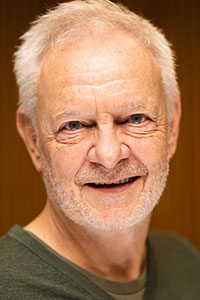
As Associate Professor at the Department of Nordic Studies and Linguistics at the University of Copenhagen, Palle works within media history, with particular attention to visual and aural representations of cities and suburban environments. His research spans from pre-cinematic visual culture and early film exhibition to transmedia popular culture in the twentieth and twenty-first centuries. A guiding concern throughout has been to approach popular culture without moral preconceptions – neither as cultural decay nor as pure resistance, but as a complex field of practices embedded in everyday life.
At TRANSITION, Palle’s research focuses on Danish suburbia in the post–Second World War period. Despite the fact that more than half of the Danish population has been born or raised in suburban neighbourhoods, suburbia occupies a remarkably marginal position in cultural representation and academic analysis. Through close readings of film, television, pop music, graphic novels, poetry, and literature, he asks why suburban life so often appears as a cultural blind spot:
My research sets out to understand why suburbia, often considered a non-space, has such a bad standing in Danish culture – and how to help to change that.
This question is not only scholarly but also personal. Born and raised in a Copenhagen suburb during the optimistic expansion of the Danish welfare state, Palle’s own experiences form an important point of departure. One formative moment came in the late 1990s, when the film company Zentropa moved into former military barracks in his hometown and began using local suburban locations in their productions. Seeing familiar “non-places” transformed into sites of meaning made visible how powerfully cultural representation can reshape how places are perceived and valued.
Through his work at TRANSITION, Palle seeks to bring suburbia into sharper cultural and analytical focus. Beyond academic publications and teaching, he aims to engage broader audiences by collaborating with local museums, libraries, and cultural institutions in suburban areas. In doing so, his research contributes to the centre’s wider interest in rural–urban transitions by foregrounding suburbia as a lived, contested, and culturally meaningful landscape – one that has played a central role in shaping modern Danish life, yet still waits to be fully understood.