
How the Land Lies – Rural–Urban Entanglements in Danish Landscape Practices
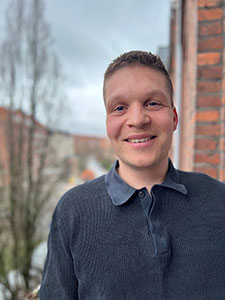
PhD-project by Oscar Dürr Kaaber, Junior Investigator.
In his project Oscar Dürr Kaaber explores tensions and entanglements between rural and urban everyday life in the ongoing negotiations about land-use-transformation as part of the green transition (Det Grønne Trepart) in Denmark.
I am interested in how landscapes are practiced both linguistically and materially. Different ideas and assumptions about landscapes exist simultaneously, and I am fascinated by how they can be entangled and coexisting even while potentially also being contradictory.
Taking this fascination as a starting point for his research, Oscar examines how negotiations around the use of land are connected to broader societal and cultural transitions at the intersection of the urban and the rural and, not least, how such transitions become visible in people’s everyday interactions with the landscapes that surround them.
Oscar works primarily ethnographically through participant observation, interviews, and photography while also using archival sources as well as historical and contemporary maps. Bringing these different kinds of data together allows him to follow how landscapes are understood, used, and negotiated across time and place.
For Oscar the experiences of moving through landscapes are especially important for his work. Cycling through cities, mountain passes, river valleys, and the open countryside in Denmark and other countries has shaped his attention to how landscapes are experienced in practice and through movement.
An important influence on Oscar’s academic engagement has been the years he spent working outside the university between his bachelor’s and master’s degrees. During this period, he worked with installing fire sprinkler systems and cultivating edible mushrooms in different waste materials. These experiences continue to inform his interest in material practices and everyday interactions with environments and infrastructures.