
Close by, yet distant: Central paradoxes in state relocation to peripheral Denmark
TRANSITION Dialogue with Birgitte Romme Larsen, Aarhus University.
The relocation of state institutions from the Danish Capital area to rural Denmark is often presented as a tool for decentralization and national cohesion. Yet what if the very practice of relocation reproduces the center–periphery hierarchies it seeks to address?
Drawing on her monograph Vejen til Nakskovs hjerte: En etnografi om udflytningen af en statslig arbejdsplads fra by til land (The Road to Nakskov’s Heart: An Ethnography of the Relocation of a State Institution from Urban to Rural Denmark), Birgitte Romme Larsen examines the relocation of a state institution from Copenhagen to Nakskov on the island of Lolland. Based on ethnographic fieldwork, she argues that both the implementation of relocation policies and the public and political discourse surrounding them are shaped by an inherent “center-centrism”: even when state institutions are physically moved, the institutional logics and ways of doing things, as well as the very measures of relocation success, remain defined from the center.
The presentation thus invites a reconsideration of what decentralization actually entails in everyday practice. If state relocation is to transform relations between center and periphery rather than simply displace administrative units, it requires a central state capable of adapting its practices and ways of thinking to diverse local contexts — and hence of enacting “statehood” in multiple ways across different geographical environments.
Please sign up here for the event.
Biography
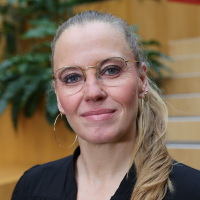 Birgitte Romme Larsen is Associate Professor in Educational Anthropology at the Danish School of Education (Aarhus University). Her research examines the intersection of migration and local communities, focusing on everyday encounters in Danish rural areas between established residents and newcomers, including refugees, asylum seekers, and relocated state employees. Through long-term ethnographic fieldworks, her collected work thus offers in-depth empirically grounded insights into how various state policies of relocation translate into everyday local life and complexity.
Format
With TRANSITION Dialogues we want to create a conversational space where researchers, practitioners, and other professionals reflect together on themes central to understanding rural–urban transitions. Each Dialogue begins with a short input from our guest, followed by an open, exploratory conversation with all participants. The aim is not to reach consensus but to share perspectives, probe assumptions, and think collectively across disciplines and experiences.
Map of South Campus
View directions.
View on map of the Faculty of Humanities - South Campus.
View map of South Campus (pdf).