
Unravelling the Unknown Collaborations That Shaped Modern Denmark
TRANSITION Dialogue with Svava Riesto and Henriette Steiner, University of Copenhagen.
During the 1960s and early 1970s, Danish landscapes and cities underwent massive changes as a result of rapid urbanization and a building boom. Infrastructure, housing, green parks, and public institutions created new frameworks for everyday life in the welfare society. The industrial construction techniques and materials that made this transformation possible have been both praised and criticized. Several researchers have also pointed to an exceptional holistic thinking in Danish architecture of the period — yet the collaborative practices behind it remain under-researched.
In this TRANSITION Dialogue, Svava Riesto and Henriette Steiner ask how people from different professions and backgrounds actually worked together during that building boom to shape new built urban and rural environments. Architects, landscape architects, urban planners, and others collaborated not only across disciplinary divides, but also across differences of gender, class, age, and geography. This Dialogue sheds light on both the successes and the challenges of these diverse collaborations: What made them possible? What can they tell us about the conditions for collaboration today? And what methods and archival sources do we need to uncover these histories?
Biography
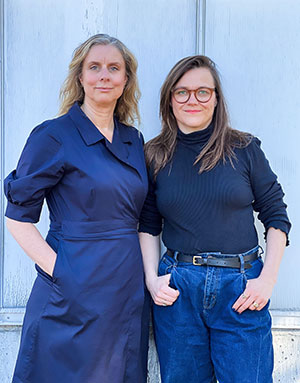 Svava Riesto and Henriette Steiner, both professors at the University of Copenhagen, co-lead the interdisciplinary research project Learning from Collaboration – Building Future Practice. The project is a collaboration between the University of Copenhagen, the Technical University of Denmark, the Schools of Architecture in Copenhagen and Aarhus, and Aalborg University, and financed by Realdania.
Format
TRANSITION Dialogues create a conversational space where researchers, practitioners, and invited guests reflect together on themes central to understanding rural–urban transitions. Each Dialogue begins with a short input from our guest, followed by an open, exploratory conversation with all participants. The aim is not to reach consensus but to share perspectives, probe assumptions, and think collectively across disciplines and experiences.
Map of South Campus
View directions.
View on map of the Faculty of Humanities - South Campus.
View map of South Campus (pdf).